AYAHUASCA E O INEFÁVEL
NEUROCIÊNCIA, ARTE VISIONÁRIA, INCONSCIENTE E ESPIRITUALIDADE AMERÍNDIA
DOI:
https://doi.org/10.33871/sensorium.2025.12.10422Resumo
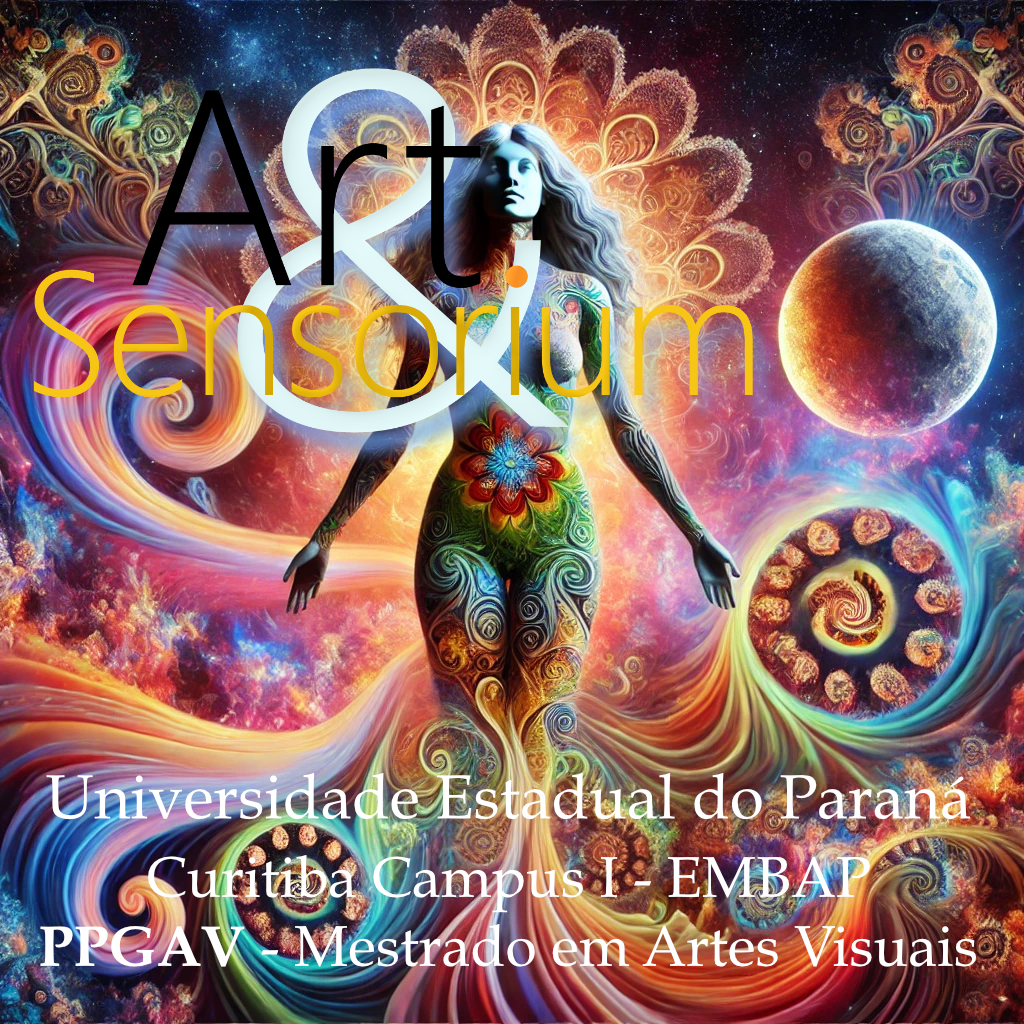
A experiência com a ayahuasca e estados não ordinários de consciência envolve visões simbólicas, acesso ao inconsciente e uma percepção alterada da realidade. Sua natureza metafísica desafia as categorias convencionais de linguagem e representação, sendo frequentemente descrita como inefável. Embora a arte, em qualquer contexto, possua um grau de inefabilidade, a arte visionária que busca expressar essas vivências enfrenta desafios ainda maiores, pois tenta traduzir conteúdos dinâmicos e subjetivos que escapam às estruturas simbólicas tradicionais. Participantes de rituais com ayahuasca relatam visões de geometrias sagradas, unidade cósmica, amor incondicional e encontros com entidades divinas ou aspectos sombrios da psiquê. Nenhuma dessas percepções pode ser representada fielmente devido a limitações cognitivas, conceituais e técnicas. Artistas importantes como Pablo Amaringo e Alex Grey tentaram captar os aspectos pictóricos dessas experiências, desenvolvendo uma linguagem visual que dialoga com os mistérios do inconsciente e do divino. A psiquiatra Nise da Silveira, em paralelo, demonstrou como a arte pode servir como ferramenta terapêutica para acessar conteúdos profundos da psiquê, algo que ressoa no pensamento junguiano e no trabalho de pesquisadores como Stanislav Grof e Terence McKenna. A relação entre arte visionária, inconsciente e contracultura sugere que essas representações funcionam como pontes entre a subjetividade humana e estados ampliados de consciência. Tecnologias emergentes, como realidade virtual e inteligência artificial, são abordadas como possíveis meios para aprofundar a compreensão dessas experiências e difundir seu acesso à população, embora também enfrentem limitações na captação de sua complexidade e esplendor. Apesar dos esforços contínuos de grandes artistas e cientistas da contemporaneidade, a experiência com a ayahuasca continua a desafiar os limites da linguagem e da cognição humana, consolidando-se como uma biotecnologia ancestral ameríndia de grande relevância médica, espiritual, estética e filosófica.
Downloads
Downloads
Publicado
Versões
- 2025-12-22 (3)
- 2025-06-26 (2)
- 2025-04-09 (1)
Edição
Seção
Licença
Copyright (c) 2025 Art&Sensorium

Esta obra está licenciado com uma Licença Creative Commons Attribution 3.0 Unported License.
Autores que publicam nesta revista concordam com os seguintes termos:- Autores mantém os direitos autorais e concedem à revista o direito de primeira publicação, com o trabalho simultaneamente licenciado sob a Licença Creative Commons Attribution que permite o compartilhamento do trabalho com reconhecimento da autoria e publicação inicial nesta revista.
- Autores têm autorização para assumir contratos adicionais separadamente, para distribuição não-exclusiva da versão do trabalho publicada nesta revista (ex.: publicar em repositório institucional ou como capítulo de livro), com reconhecimento de autoria e publicação inicial nesta revista.
- Autores têm permissão e são estimulados a publicar e distribuir seu trabalho online (ex.: em repositórios institucionais ou na sua página pessoal) a qualquer ponto antes ou durante o processo editorial, já que isso pode gerar alterações produtivas, bem como aumentar o impacto e a citação do trabalho publicado (Veja O Efeito do Acesso Livre).