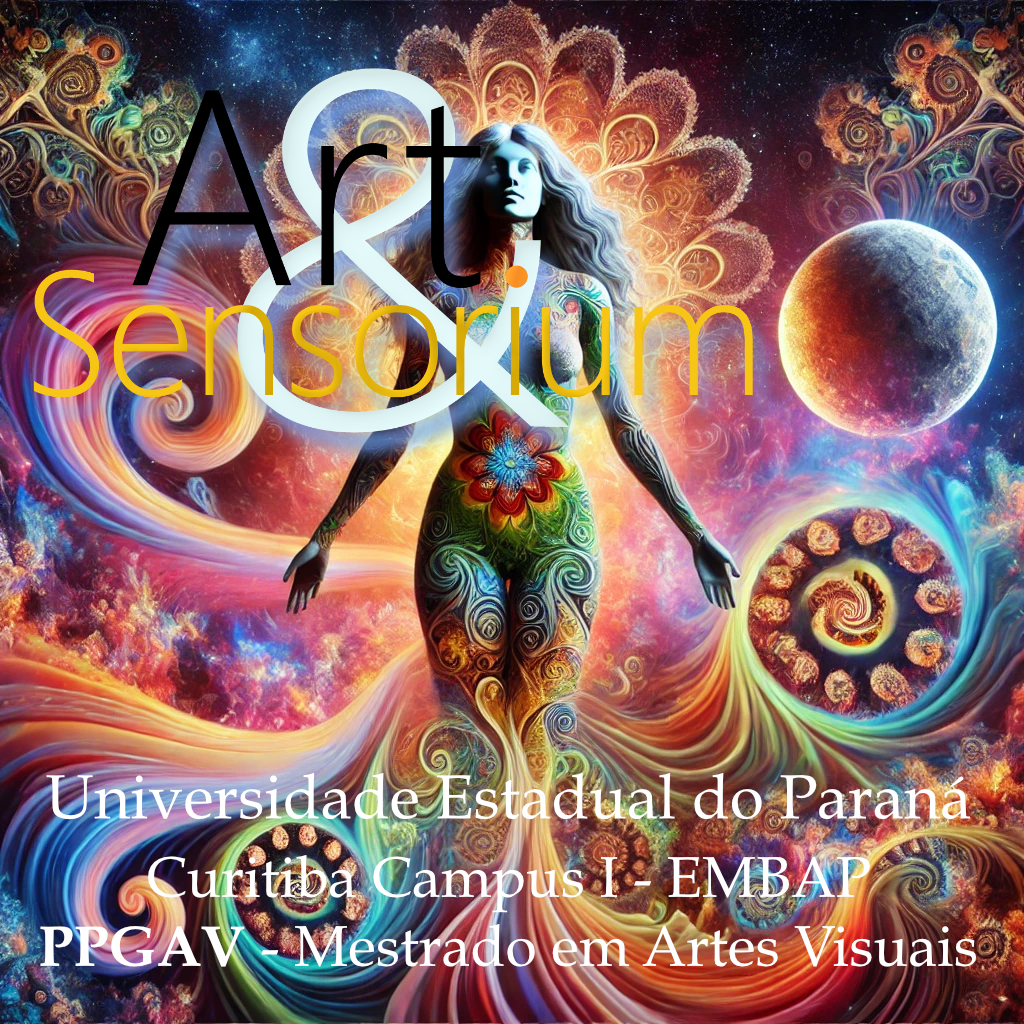
O crysTao_timE_worKs
PSICODELIA CLÍNICA E IMAGÉTICA CINEMATOGRÁFICA EM DELEUZE
DOI:
https://doi.org/10.33871/sensorium.2025.12.10731Resumo
Historicamente marginalizados pela medicina e pela psicologia, os estados não ordinários de consciência (ENOC) vêm sendo revalorizados no chamado “renascimento psicodélico”, que os considera modos legítimos de experiência e de produção de sentido. Nesse contexto, a imagética psicodélica é compreendida como um acontecimento sensível, expressão singular da subjetividade em transformação, que exige formas abertas de escuta e expressão. O conceito de cristal de tempo, associado à ideia de uma ontologia da vibração, propõe uma realidade não estática, mas rítmica e processual, em que o ser se dá como fluxo e oscilação. Tal como os cristais de tempo desafiam a estabilidade newtoniana, os psicodélicos rompem com a rigidez da conectividade cerebral, abrindo espaço para reconfigurações do self e da experiência temporal. O cinema, por sua vez, surge como tecnologia privilegiada para pensar as relações entre movimento e tempo. A imagem cinematográfica, especialmente a imagem-cristal de Deleuze, não representa o real, mas o faz vibrar em sua multiplicidade temporal. Há, portanto, uma convergência entre cinema e psicodelia: ambos operam como máquinas de tempo, desorganizando a percepção ordinária e expondo o sujeito a uma experiência intensiva e desterritorializante. Assim, a imagem psicodélica apresenta-se como expressão ontológica da diferença para uma escuta filosófica atenta à sua potência transmutadora. Este artigo propõe uma reflexão interdisciplinar sobre as dimensões da imagem mental na psicodelia clínica, articulando neurociência, filosofia contemporânea e cinema.
Downloads
Downloads
Publicado
Versões
- 2025-06-02 (3)
- 2025-06-02 (2)
- 2025-05-19 (1)
Edição
Seção
Licença
Copyright (c) 2025 Art&Sensorium

Esta obra está licenciado com uma Licença Creative Commons Attribution 3.0 Unported License.
Autores que publicam nesta revista concordam com os seguintes termos:- Autores mantém os direitos autorais e concedem à revista o direito de primeira publicação, com o trabalho simultaneamente licenciado sob a Licença Creative Commons Attribution que permite o compartilhamento do trabalho com reconhecimento da autoria e publicação inicial nesta revista.
- Autores têm autorização para assumir contratos adicionais separadamente, para distribuição não-exclusiva da versão do trabalho publicada nesta revista (ex.: publicar em repositório institucional ou como capítulo de livro), com reconhecimento de autoria e publicação inicial nesta revista.
- Autores têm permissão e são estimulados a publicar e distribuir seu trabalho online (ex.: em repositórios institucionais ou na sua página pessoal) a qualquer ponto antes ou durante o processo editorial, já que isso pode gerar alterações produtivas, bem como aumentar o impacto e a citação do trabalho publicado (Veja O Efeito do Acesso Livre).